
Blog
Frontgrade Announces Roles in NASA’s Roman Telescope, ESA’s PLATO, Satellite Navigation, and Mercury Exploration
Announced at Space Tech Expo Europe in Bremen, the contributions span spacecraft computing, scientific data processing, navigation, and instrument control.
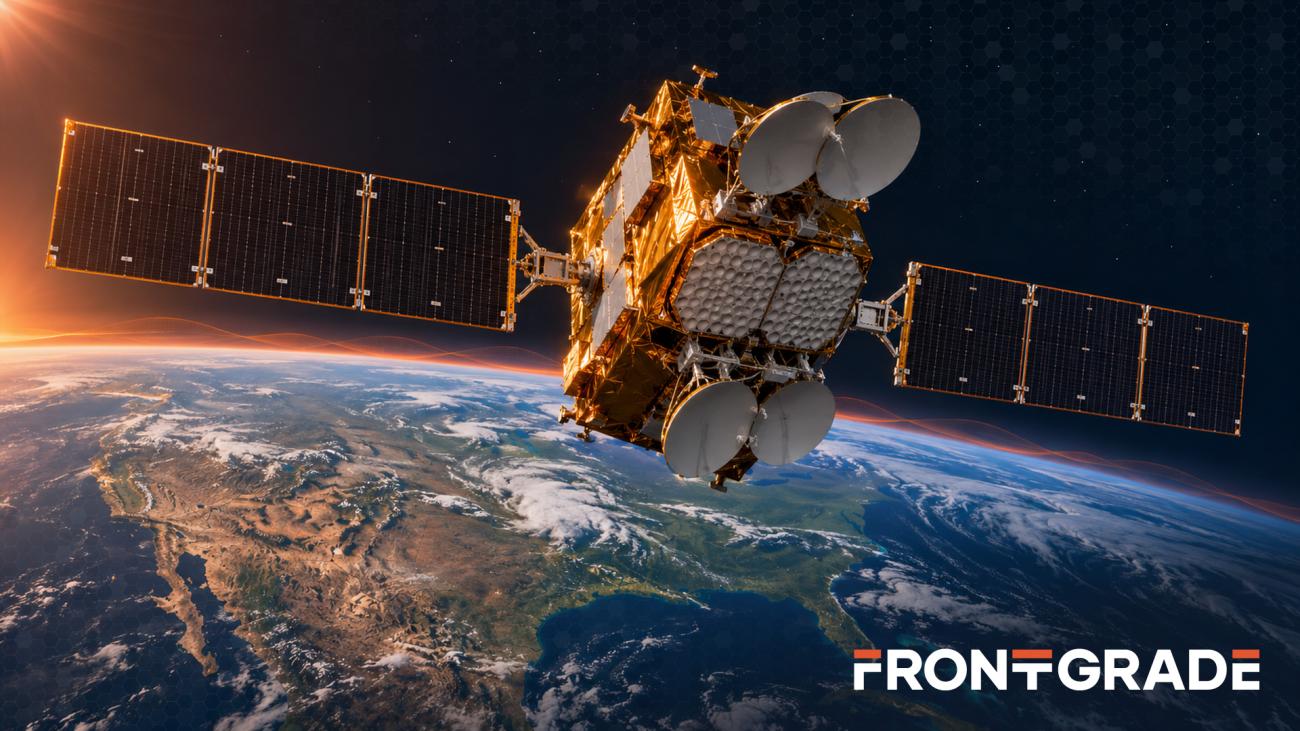
Announced at Space Tech Expo Europe in Bremen, the contributions span spacecraft computing, scientific data processing, navigation, and instrument control.
Frontgrade announced its contributions to four space missions and applications at Space Tech Expo Europe in Bremen, connecting its computing and electronics capabilities to the search for other worlds, satellite navigation, and planetary exploration.
The announcements detail how Frontgrade technology supports spacecraft operations, processes and manages scientific data, and controls instruments through long operational lifetimes.
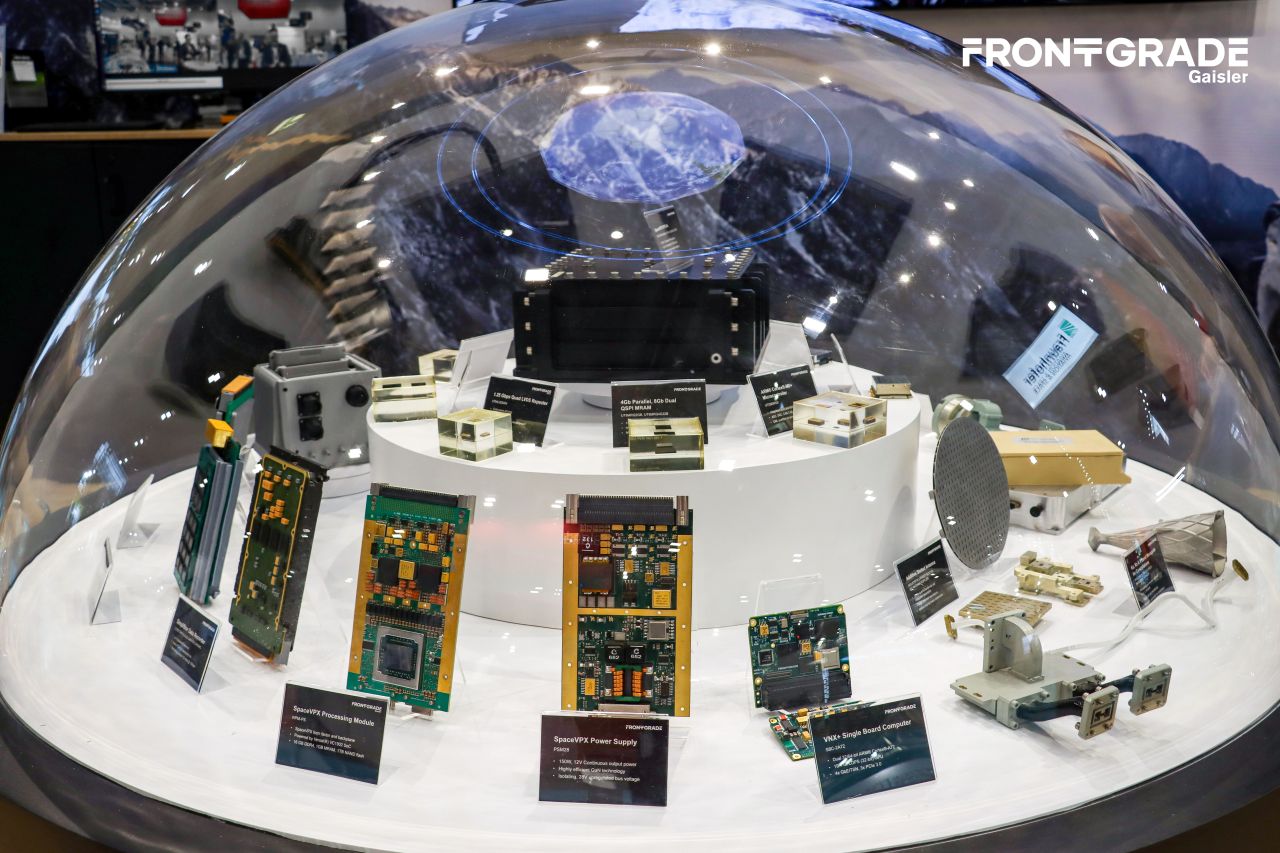
Supporting NASA’s Roman Space Telescope
NASA’s Nancy Grace Roman Space Telescope will investigate dark energy, discover exoplanets, and explore the evolution of the universe. Frontgrade Gaisler’s radiation-hardened processors support the observatory’s spacecraft computing systems, its Wide Field Instrument and Coronagraph Instrument, and the storage and management of scientific data.
Frontgrade’s contribution extends beyond onboard processing. The observatory also incorporates radiation-hardened microelectronics supporting communications, power management, control logic, and fault-tolerant operation throughout the spacecraft.
Read more about Frontgrade’s contributions to NASA’s Roman Space Telescope.
Processing PLATO’s search for other worlds
Frontgrade Gaisler processors and SpaceWire routers form the backbone of PLATO’s payload data processing system. The upcoming ESA mission will use 26 cameras to detect and characterize exoplanets, including Earth analogues orbiting in the habitable zones of Sun-like stars.
Each of PLATO’s 12 Normal Data Processing Units is built around a Frontgrade Gaisler processor and will process imagery from two of the mission’s 24 normal cameras. The processors extract photometric data on board before it is passed along for downlink. Frontgrade Gaisler routers manage traffic connecting the processing units and the spacecraft’s service module.
Together, these technologies support the reliable processing and movement of camera data over the mission’s multi-year lifetime.
Validating satellite navigation in orbit
OrbFIX is a satellite navigation receiver designed for formation flying, rendezvous, inspection, collision avoidance, and in-orbit servicing. Within the receiver, Frontgrade Gaisler’s radiation-hardened microcontroller handles satellite bus interfaces, power modes, and onboard data processing.
Developed by Romanian InSpace Engineering, OrbFIX autonomously determined its position using multi-constellation satellite navigation data aboard the EMISAR satellite. Following that successful in-orbit validation, Frontgrade Gaisler’s microcontroller reached Technology Readiness Level 9.
The microcontroller also runs an orbital propagator and an AI-based error compensation algorithm, monitors commercial components, and executes fault detection, isolation, and recovery algorithms. The milestone gives developers a radiation-hardened, flight-proven microcontroller to build navigation capability around.
Supporting Mercury exploration
The BepiColombo Laser Altimeter, known as BELA, will map Mercury’s shape, topography, and surface morphology to meter-scale accuracy. Frontgrade Gaisler’s fault-tolerant processor technology supports the instrument’s data handling and control functions and has managed the payload throughout its eight-year journey to Mercury.
BELA has been powered on and functionally tested several times during the joint ESA/JAXA mission’s cruise, including checkouts shortly after launch and during Mercury flybys. Its primary mission is ranging the planet’s surface, with full science operations scheduled to begin in April 2027.
News & Insights
Ready to discuss your mission architecture?
Connect with engineers across RF, processing, microelectronics, and motion to evaluate the right architecture for your mission.