
Blog
Start With the Mission: An Engineering Approach to RF Hardware
How mission, frequency, operating domain, and SWaP shape the path from requirement to fielded system
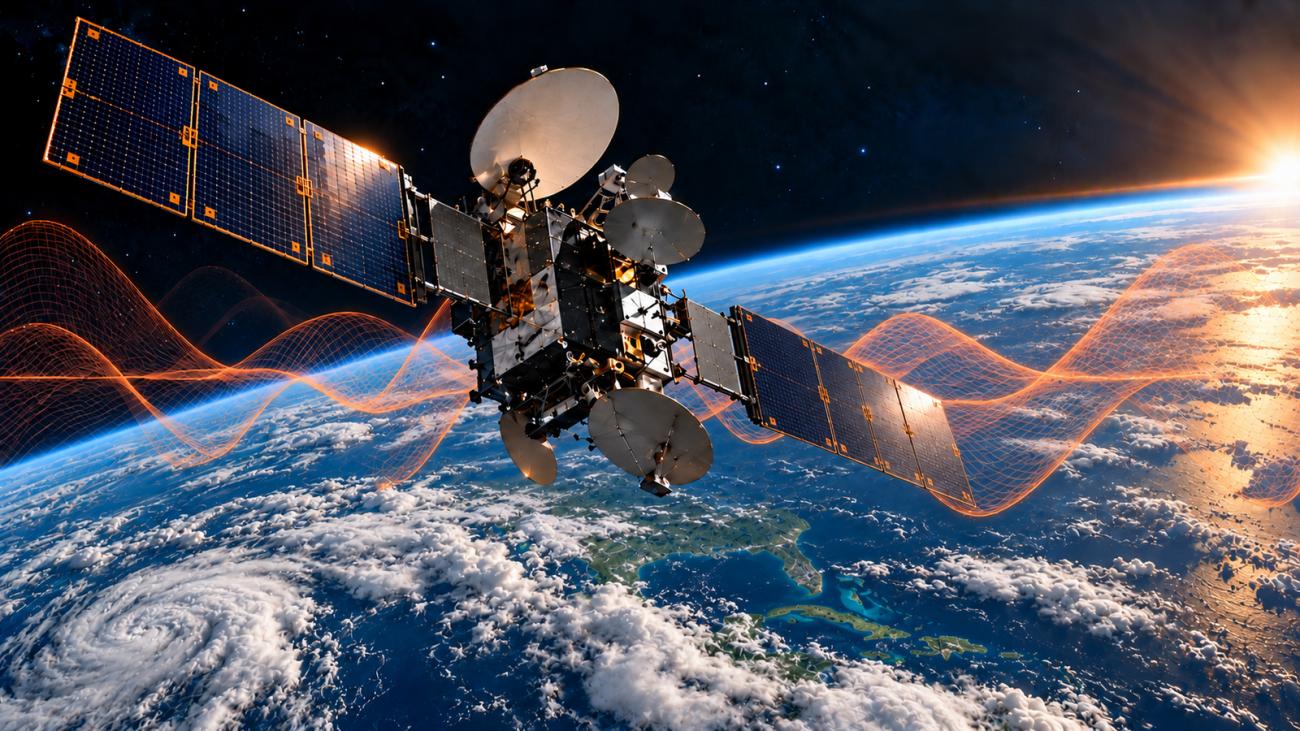
A space communications team needs more RF output, but the spacecraft has little room for additional power demand or heat. An electronic warfare team needs to respond to a changing signal threat within the limits of an aircraft or vehicle already in service. Both face a question that reaches beyond the amplifier: how can an RF system meet the mission's requirements while fitting the platform that must carry it?
That question deserves attention early. Threats, waveforms, and mission architectures keep changing, while the platform's power, thermal, integration, and qualification limits stay fixed. An amplifier that performs well in one system can't simply be dropped into another. Every program wants its hardware fast, affordable, and built exactly to spec, and few get all three.
Where every RF decision starts
Four factors define the boundaries of every RF design:
1. Mission sets the performance requirement. It determines what the amplifier has to deliver, from output power to bandwidth.
2. Frequency sets the technology. It shapes which device technologies are practical and how much output power they can deliver.
3. Domain sets the qualification bar. The environment determines parts selection and testing, from shock and vibration on a vehicle to radiation tolerance in orbit.
4. Size, weight, and power set the budget. Everything else has to fit inside it.
A change in one moves the others. Any power the amplifier draws but doesn't convert to RF becomes heat, so more output at a given efficiency means more heat for the platform to remove. That runs straight into the SWaP budget, and the domain then limits which parts and cooling approaches are allowed. Good RF engineering finds the point where all four requirements are met.
Where that point falls depends on the mission.
In space, there's no chance of maintenance, so RF amplification and electronic power conditioning belong in the same architecture discussion, where engineers can treat the power path, interfaces, and thermal load as one problem.
In electronic warfare, RF hardware operates inside a larger architecture that has to sense, process, and respond, and whether the system detects signals or jams them drives the frequency coverage it needs.
In tactical communications, a new channel has to coexist with the radios and antennas already on the platform. Co-site interference matters as much as output power, and an amplifier that distorts a critical waveform fails the mission.
What proven heritage brings to a new program
Frontgrade and its predecessor companies have spent decades building power amplifiers and RF subsystems for radar, electronic warfare, and tactical communications across frequencies from DC to 50 GHz, on land, at sea, in the air, and in orbit.
For example, Aethercomm, now part of Frontgrade, was recognized by Sierra Nevada Corporation as a top supplier supporting its Baldr counter-IED system. Developed for the Army’s Individual Counter Radio Controlled Improvised Explosive Device Electronic Warfare (ICREW) program, Baldr was designed to help protect soldiers operating on foot from radio-triggered explosives.
Last year, when a customer approached Frontgrade with just weeks to prepare for a critical demonstration of a next-generation RF capability in a Counter Unmanned Aerial Systems (C-UAS), our engineering teams answered the challenge. We designed and delivered a custom RF hardware solution that incorporated emerging technologies not yet commercially available. Frontgrade was able to achieve this aggressive timeline by using our internal investments and modular approach to RF engineering designs. That initial design became the foundation for a product that continued to evolve through multiple hardware revisions, scaling from prototype to production as mission requirements expanded.
More recently, a customer approached Frontgrade in need of a mission critical amplifier to support a rapid prototype space experiment that could be tailored and delivered within four-months of award in order to meet a specific launch window. Frontgrade’s engineering team used existing, space flight proven designs to enable a solution that was quickly adapted to meet the specific frequency and power requirements. This ability to deliver at the speed of relevance enabled our customer’s demonstration that will be in contention for follow on space vehicles.
Our collective experience gives our engineers working knowledge of how existing designs manage power, heat, controls, and interfaces, and how those choices carry over to a new application. Sometimes an existing design fits as is, which is the fastest and least expensive path. More often, it meets most of the requirement and needs targeted changes. Starting from proven hardware keeps those changes bounded and brings integration and qualification questions up early, while there's still time to act on them.
Start the conversation
If your team is facing a new RF requirement, bring Frontgrade the mission and platform constraints for a technical briefing. We'll work through what fits today and what it would take to get the rest of the way.
News & Insights
Ready to discuss your mission architecture?
Connect with engineers across RF, processing, microelectronics, and motion to evaluate the right architecture for your mission.